
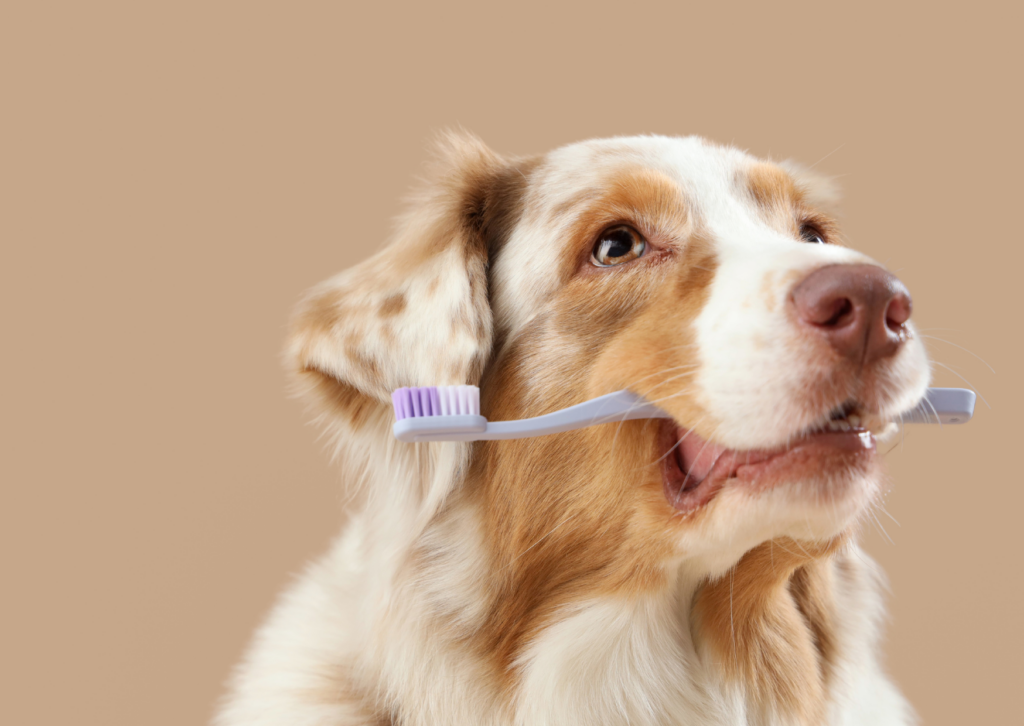
If your dog has bad breath, you’ve probably heard or thought “that’s just how dogs smell.” It’s one of those things pet owners tend to accept as normal. But here’s what we want you to know: persistent bad breath in dogs and cats is rarely just a quirk. More often, it’s the first visible signal of dental disease, a condition so common that most dogs and cats already have some degree of it by age three.
At Indian Peaks Veterinary Hospital, we talk about dental health at nearly every wellness visit. Not because we’re checking a box, but because we’ve seen firsthand what untreated dental disease can do. Not just to a pet’s mouth, but to their heart, their kidneys, their liver, and their quality of life. If you’ve never thought of your pet’s dental health as a whole-body issue, this article is for you.
Dental Disease in Pets Is More Common Than You Think
Dental disease is the most commonly diagnosed health condition in companion animals. Studies suggest that by age three, the majority of dogs and cats show signs of it and yet most pet owners have no idea it’s already present.
Here’s how it happens: every day, a soft film of bacteria called plaque forms on the surface of your pet’s teeth. If it isn’t removed through brushing or professional cleaning, it hardens into tartar, a rough, porous surface that allows more bacteria to accumulate. Over time, those bacteria infect the gums, triggering inflammation, tissue breakdown, and eventually bone loss around the teeth.
The process is gradual and largely silent. There’s no dramatic moment when dental disease “begins.” It simply progresses, quietly and consistently, until the damage is significant enough to show up in ways owners can see or notice.
This isn’t a reflection of how much you love your pet or how well you care for them. It’s a condition that develops in the background of daily life, which is exactly why routine professional monitoring matters so much.
Your Pet’s Mouth and Their Body Are More Connected Than You Think
This is the part most pet owners don’t know, and the reason we feel so strongly about dental care as a health priority rather than just a hygiene habit.
When gum tissue becomes infected and inflamed, the bacteria responsible don’t stay contained to the mouth. They can enter the bloodstream through the damaged tissue and travel to organs throughout the body. Over time, this chronic bacterial exposure can contribute to serious systemic disease.
Here’s what the research and clinical evidence show:
Heart. Oral bacteria have been linked to endocarditis, inflammation of the heart valves, in both dogs and cats. The same bacteria found in diseased gum tissue have been identified in cardiac lesions, suggesting a direct pathway from the mouth to the heart.
Kidneys. The kidneys filter the bloodstream continuously, which means they are directly exposed to any bacteria circulating from an infected mouth. Chronic dental disease has been associated with kidney disease, a connection that is especially significant in cats who are already predisposed to kidney issues as they age.
Liver. Elevated liver enzymes are commonly seen in pets with advanced dental disease, reflecting the liver’s role in processing the bacterial load that travels through the bloodstream.
We share this not to alarm you, but to reframe something important: dental care is one of the most accessible and meaningful ways to protect your pet’s long-term organ health. At Indian Peaks, we evaluate the full picture at every dental visit, using digital radiography and in-house diagnostics to see what the eye alone cannot. Because a healthy mouth is part of a healthy body.
Dental disease affects more than your pet’s teeth. Let’s take a closer look together.
Signs of Dental Disease in Pets (Here’s What to Watch For)
Dogs and cats are instinctively wired to mask discomfort. In the wild, showing vulnerability means becoming a target, and that survival instinct doesn’t disappear in domesticated pets. Which means that by the time dental disease is obvious, it has often been causing pain and damage for much longer than anyone realized.
You know your pet better than anyone. If something feels different, they’re eating more slowly, they’ve lost interest in their favorite chew toy, they seem a little quieter than usual, trust that instinct. It’s worth a conversation.
Here are the most common signs of dental disease in dogs and cats:
- Persistent bad breath – beyond the typical “dog breath,” a consistently foul odor is a red flag
- Red, swollen, or bleeding gums – healthy gums should be pink and firm
- Visible yellow or brown buildup along the gumline
- Difficulty chewing, dropping food, or favoring one side of the mouth
- Pawing at the mouth or face
- Drooling more than usual
- Decreased appetite or unexplained weight loss
- Behavioral changes such as increased irritability, withdrawal, or reduced activity and playfulness
Cats tend to show even subtler signs than dogs, often simply eating less, becoming quieter, or grooming less than they used to. Because the signs can be so easy to miss or explain away, annual dental exams are essential, even when everything seems fine at home.
The Stages of Dental Disease in Pets and Why Early Detection Changes Everything
Dental disease progresses in four recognized stages, from early gingivitis (Stage 1) to severe periodontal disease with significant bone and tissue loss (Stage 4). The good news: Stage 1 is often fully reversible with a professional cleaning and a consistent home care routine. The further the disease progresses, the more limited and complex the treatment options become.
This is why early detection matters so much. When we catch dental disease at Stage 1 or Stage 2, we have far more options and far better outcomes than when we’re addressing Stage 3 or 4. In advanced cases, tooth extractions are often the most compassionate path forward, because a diseased tooth that can’t be saved is a source of ongoing pain and bacterial exposure.
At Indian Peaks, every dental exam includes a thorough evaluation of your pet’s mouth. When a cleaning or procedure is needed, we use digital radiography to see what’s happening beneath the gumline, where most of the disease activity actually occurs. What we find there often tells a different story than what’s visible on the surface.
The Real Cost of Untreated Dental Disease
When dental disease goes unaddressed, the consequences compound. What begins as early gum inflammation can progress to significant bone loss, loose or missing teeth, and chronic pain that quietly reshapes a pet’s daily experience, including how they eat, how they play, and how they interact with the people they love.
Beyond the mouth, the systemic risks we described earlier, including heart, kidney, and liver involvement, become more pronounced as disease advances. And from a practical standpoint, earlier intervention is almost always less complex and less costly than addressing advanced disease.
We’ve seen this play out in our own exam rooms. One of our most memorable cases involved a senior cat whose owner brought her in because she seemed to be declining. She was losing weight, becoming withdrawn, and was no longer her usual self. During a thorough workup that included a dental assessment, we diagnosed and treated a thyroid condition that had gone undetected. Within weeks, she was back to playing and purring. That’s what whole-body care looks like in practice: looking beyond the obvious to find what’s actually driving a pet’s decline.
Research also suggests that pets with well-maintained dental health tend to live longer, more comfortable lives. Giving your pet a healthier mouth is one of the most meaningful investments you can make in the years you have together.
What Professional Dental Care Actually Looks Like
One of the most common reasons pet owners put off dental care is uncertainty about what the process involves, what it costs, and whether anesthesia is safe. We want to walk you through it clearly, because once you understand what a professional dental visit actually looks like, the decision becomes much easier.
At Indian Peaks, a professional dental visit includes:
A thorough oral exam and assessment. We evaluate every tooth, the gumline, and the surrounding tissue for signs of disease, inflammation, or abnormality.
Dental X-rays. This is where the real picture emerges. Up to 60% of dental disease occurs below the gumline and is invisible to the naked eye. Digital dental radiography lets us see bone loss, root damage, and infection that a visual exam simply cannot detect. This is how we stage disease accurately and make treatment recommendations you can trust.
Professional scaling and polishing under anesthesia. We know anesthesia can feel like a barrier, so let us be straightforward about why it’s necessary. A complete, safe, and accurate dental exam and cleaning cannot be performed on an awake pet. Anesthesia allows us to work thoroughly without causing stress or pain, protect your pet’s airway from bacteria and debris, and take the X-rays we need to see the full picture. Our team follows strict anesthetic protocols, and your pet’s safety and comfort are our first priority throughout.
A transparent conversation before anything proceeds. We share every finding with you, explain every option, and discuss costs clearly before moving forward with any treatment. No surprises. No pressure. Just the information you need to make a decision you feel good about.
Our team holds Low Stress Handling certification, and your pet will have one dedicated team member alongside your veterinarian throughout the entire visit, because consistency and calm matter as much to us as clinical excellence.
What You Can Do at Home
Professional dental care and at-home care work together. Neither replaces the other, but both make a meaningful difference in your pet’s long-term dental health.
Here’s what we recommend:
Daily tooth brushing is the single most effective thing you can do at home to slow plaque buildup. Even brushing a few times a week is significantly better than nothing. Use a pet-safe toothpaste, never human toothpaste, and start slowly, especially with younger pets who need time to adjust.
VOHC-approved dental chews and treats can help reduce plaque and tartar between brushings. Look for the Veterinary Oral Health Council (VOHC) seal, which indicates the product has been tested and proven effective.
Dental diets are specially formulated to reduce plaque and tartar through the mechanical action of chewing and specific ingredient profiles. Ask us whether a dental diet might be a good fit for your pet.
Water additives offer a low-effort option for pets who resist other forms of home care, simply added to the water bowl daily.
We understand that not every pet will tolerate brushing, and not every household has the same bandwidth for home dental routines. That’s okay. We’ll work with you to find an approach that fits your pet and your life, because the best dental care plan is the one you can actually stick to.
What home care cannot do is replace the need for periodic professional cleanings. Even the most consistent home routine leaves areas that only professional instruments and dental X-rays can address. Based on your pet’s individual risk factors including breed, age, history, and oral health status, we’ll recommend a professional cleaning schedule that makes sense for them.
Your Pet’s Mouth Is a Window Into Their Overall Health
Dental disease is one of the most common, most underdiagnosed, and most preventable health conditions affecting dogs and cats today. And because the mouth is so deeply connected to the rest of the body, taking care of your pet’s teeth is about so much more than fresh breath.
At Indian Peaks, we’re a privately owned, AAHA-accredited veterinary hospital right here in Boulder. We’re not a corporate chain. We’re your neighbors, a team that genuinely cares about the pets and families we serve, from puppies and kittens all the way to seniors. Every dental visit here is part of a bigger commitment to your pet’s lifelong health, delivered with transparency, warmth, and clinical excellence.
Your pet’s dental health is a window into their whole-body health, and we’d love to be your partner in protecting it. Book an appointment online, through our app, or give us a call at (303) 938-9474. We’re here for every stage of your pet’s life.