
You can usually spot a dog CCL tear by a sudden hind-leg limp, often after a jump, twist, or quick change of direction, where your dog holds the leg up or barely lets the toes touch the ground. Some owners hear a yelp or even a faint pop at the moment it happens. The cranial cruciate ligament (CCL) is the dog’s version of the human ACL, and it ranks among the most common orthopedic injuries veterinarians see. Because the signs can look a lot like a pulled muscle, many families wait to see whether the limp fades. That delay can let a partial injury progress and allow arthritis to start forming. At Indian Peaks Veterinary Hospital in Boulder, CO, we examine dogs every week whose owners noticed something “just wasn’t right” after a run on the trails or a game of fetch. This article walks through what a dog CCL tear looks like in the moment, how veterinarians tell it apart from a strain, what to do right away, and why so many tears start small.
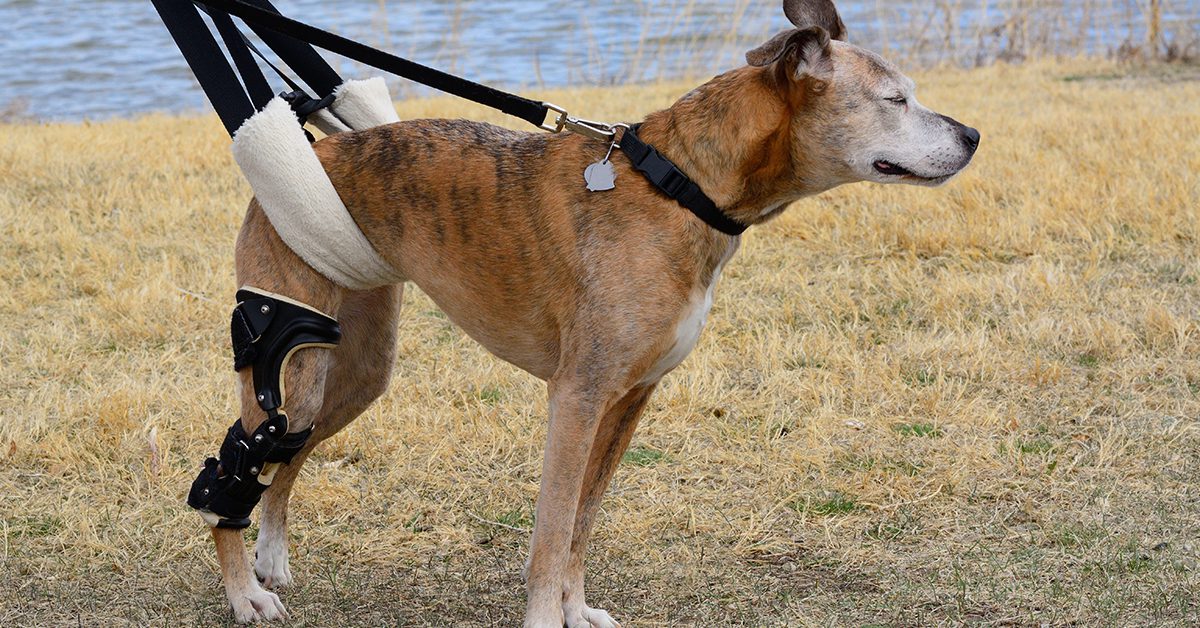
What Does a CCL Tear Look and Sound Like as It Happens?
A sudden dog CCL tear tends to show up in a dramatic, easy-to-remember moment.
The Moment of Injury
Most acute cases of a dog CCL tear happen during ordinary play. A dog plants a back foot while chasing a ball, pivots hard on slick ground, or lands awkwardly off a couch or truck tailgate. Owners often describe a sharp yelp followed by the dog pulling the back leg up toward the body. A few people report hearing a pop or click, although many dogs make no sound at all. Large, athletic breeds such as Labrador Retrievers, Golden Retrievers, and Rottweilers face a higher risk of a dog CCL tear, but any dog can experience one.
What You May Notice Over the Next Few Minutes and Hours
Right after the injury, your dog may stand on three legs or touch only the tips of the toes to the ground. Within a day, the limp often improves slightly as the initial pain settles, which can give owners false reassurance. Common visual cues include:
- Toe-touching or holding one back leg completely off the ground
- Sitting with the affected leg stuck out to the side instead of tucked under the body
- Reluctance to jump into the car or climb stairs
- Shifting weight to the front legs or the opposite hind leg while standing
- Swelling or thickening along the inside of the knee
Any of these signs after a sudden limp suggests a dog CCL tear is possible and deserves a veterinary exam rather than a wait-and-see approach.
How Can You Tell a Muscle Strain From a Structural Knee Tear?
Telling these two injuries apart at home is difficult, and a hands-on exam is the only reliable way to know.
Why the Two Injuries Look Alike
A soft tissue strain and a dog CCL tear can both cause sudden lameness, soreness, and a dog who would rather lie down than play. Both may improve somewhat in the first few days. The key difference is that a strain involves stretched muscle fibers that typically heal with time, while a torn cruciate ligament leaves the knee mechanically unstable. That instability does not repair itself.
Clues That Point Toward a Ligament Problem
Lameness that returns after exercise, a limp that never fully resolves within a week or two, or a dog that seems fine one day and lame the next all point toward the knee rather than a muscle. Dogs living with a dog CCL tear also tend to lose muscle mass in the thigh of the injured leg over time, since they avoid using it.
How Veterinarians Confirm a Torn CCL
During an orthopedic exam, your veterinarian feels for abnormal movement in the knee using two specific tests:
- Cranial drawer test: The vet gently moves the tibia forward relative to the femur to check for looseness.
- Tibial thrust test: The vet flexes the ankle while holding the knee to see if the shinbone slides forward.
Tense or muscular dogs sometimes need sedation for an accurate result, because strong thigh muscles can mask a dog CCL tear during the exam. X-rays help rule out fractures and show joint fluid or early arthritis, which supports the diagnosis of a dog CCL tear.
What Should You Do Right Away If You Suspect a Knee Injury?
The most helpful first step is simple: limit your dog’s movement and contact your veterinarian.
Protect the Leg Until Your Dog Is Examined
A partially torn ligament can rupture completely with more running or jumping, so calm, restricted activity matters until a veterinarian has evaluated the knee. Practical ways to reduce strain include:
- Keeping your dog on a leash for every trip outside, even in a fenced yard
- Blocking access to stairs and furniture
- Laying down rugs or mats on slippery floors
- Lifting or assisting larger dogs into and out of the car
Avoid Giving Medication on Your Own
Never give your dog human pain relievers such as ibuprofen, naproxen, or acetaminophen. These drugs can cause serious toxicity in dogs. Your veterinarian can prescribe safe, appropriate pain relief after the exam. Also avoid hands-on stretching or massaging the knee, since manipulating an unstable joint can worsen a dog CCL tear. Leave the physical assessment to your veterinary team.
When to Seek Care Urgently
Call your veterinarian the same day if your dog will not bear any weight, cries when you touch the leg, the knee looks visibly swollen, or your dog shows signs of significant pain such as panting, trembling, or crying out. A same-week visit makes sense for milder limps, including a limp that seems to come and go. Before the appointment, jot down when the lameness started, what your dog was doing, and whether it gets better or worse with rest. A short phone video of your dog walking can also help, because many dogs hide their limp in the exam room. Early evaluation of a dog CCL tear gives you more treatment options and helps protect the joint from further damage.
Why Do So Many Dogs Have a Partial Tear Before a Full Rupture?
Unlike most human ACL injuries, a dog CCL tear usually results from slow degeneration rather than one traumatic event.
A Ligament That Weakens Over Time
In many dogs, the cruciate ligament gradually loses strength due to a combination of genetics, body weight, knee anatomy, and inflammation within the joint. The fibers begin to fray long before the ligament fails completely. During this phase, a dog may show mild, on-and-off stiffness, especially after rest or a long hike, that owners often attribute to aging or a busy weekend.
From Partial Tear to Complete Rupture
A partial dog CCL tear can no longer stabilize the knee as well as it should, which adds stress to the remaining fibers. Eventually, an ordinary movement finishes the job, and the dog suddenly becomes much more lame. This explains why the “pop” moment can seem to come out of nowhere even though changes were developing for months. In other words, the dramatic limp you see is often the final chapter of a dog CCL tear that began quietly.
Why Catching It Early Matters
Identifying a partial dog CCL tear before full rupture can reduce damage to the meniscus and slow arthritis. It also gives your veterinarian time to discuss surgical options like TPLO and plan care around your dog’s age and activity level. Because many dogs eventually develop a dog CCL tear in the opposite knee as well, ongoing monitoring of both hind legs is a smart part of long-term care.
Getting Answers About a Possible Dog CCL Tear in Boulder
A sudden hind-leg limp can feel alarming, and it is natural to hope the problem will simply go away. With a dog CCL tear, though, the knee instability remains even when the limp seems to improve, so a professional exam is the clearest path forward. Recognizing the early signs, protecting the leg, and scheduling a visit promptly all give your dog the best chance at a strong, comfortable return to activity. The veterinary team at Indian Peaks Veterinary Hospital provides thorough orthopedic exams, digital X-rays, and clear guidance on next steps, whether your dog needs surgery, rehabilitation, or close monitoring. If you suspect your dog has injured a knee, call Indian Peaks Veterinary Hospital at (303) 938-9474 to book an appointment. We will help you understand what is happening inside the joint and build a plan that fits your dog’s needs and your family’s lifestyle.